Clear Vision, Clear Rules: The Essential Do's and Don'ts of Contact Lens Wear

Top Tips and Common Mistakes to Avoid for Contact Lens Users
Proper contact lens wear and care is essential for maintaining eye health and ensuring the longevity of your lenses. Here are a few of the most common mistakes made by contact lens wearers and safer alternatives to keep your eyes healthy.
Contact Lens Do's:
- Do wash your hands thoroughly with soap and water and dry them with a lint-free towel before handling your contact lenses.
- Do follow the recommended schedule provided by your optometrist for wearing and replacing your lenses.
- Do use fresh, sterile contact lens solution every time you store your lenses.
- Do clean your contact lenses with the recommended solution before and after wearing them.
- Do store your contact lenses in a clean contact lens case.
- Do replace your contact lens case every three months or as recommended.
- Do remove your contact lenses before swimming or using a hot tub or if you’re experiencing any discomfort.
- Do have regular eye check-ups with your optometrist.
- Do follow the manufacturer's guidelines and your optometrist's recommendations regarding the wear time of your lenses.
- Do keep a backup pair of glasses with you in case you need to remove your contacts.
- Do talk with your doctor about allergy relief. He or she should be able to provide you with some methods to help alleviate your discomfort.
- Seek Medical Attention: If you experience prolonged discomfort, redness, or changes in vision, remove your lenses and consult your eye doctor immediately.
Contact Lens Don'ts:
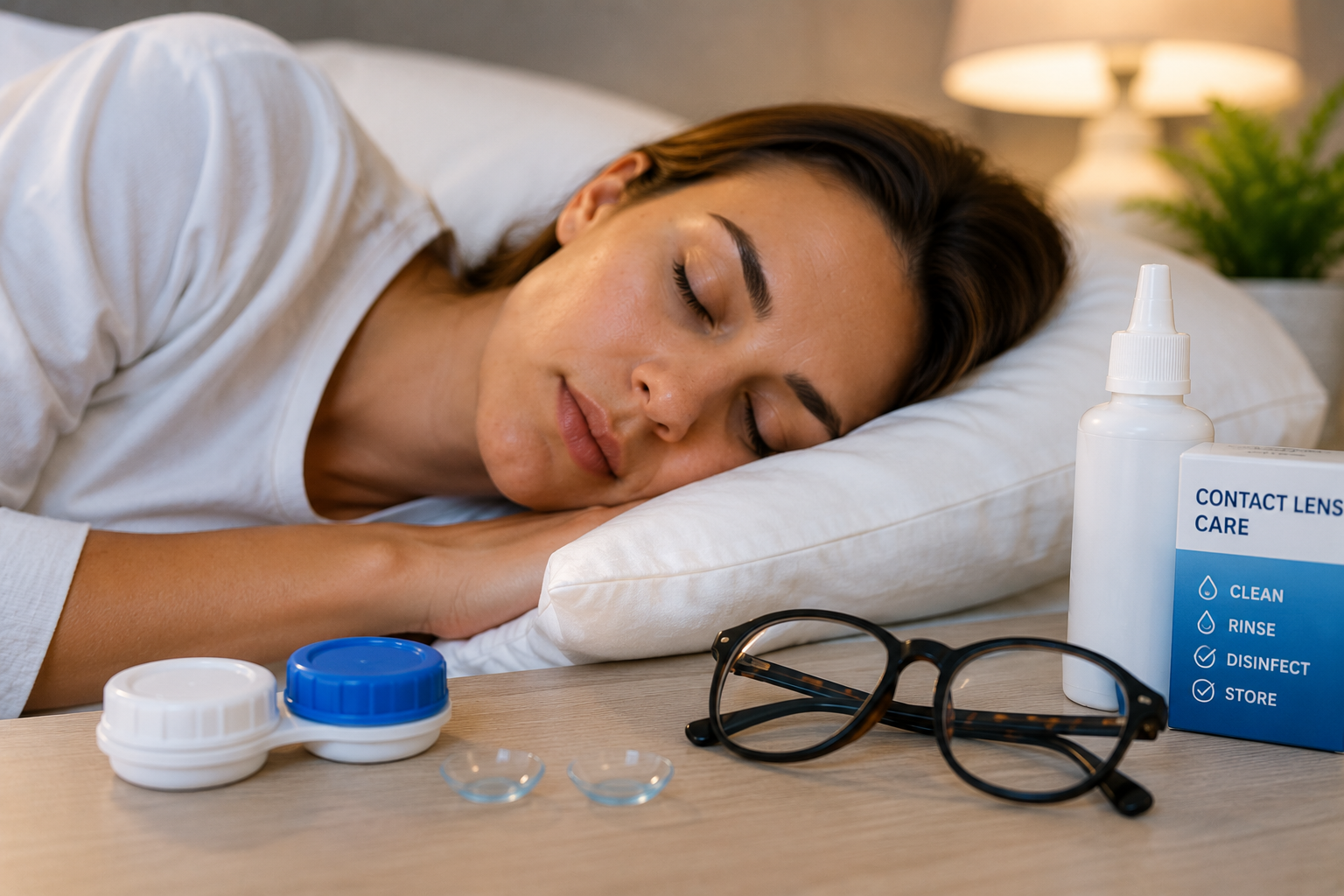
- Don't sleep in your contact lenses unless they are specifically designed for overnight wear and your optometrist has approved it.
- Don't use tap water to clean your contact lenses or contact lens case. Cleaning with water can introduce microscopic bacteria that could settle in your case, then on your contacts, and ultimately your eyes.
- Don't use saliva or put lenses in your mouth to moisten or clean them.
- Don’t top off your old solution. Adding fresh solution to solution that has been sitting overnight or longer is unsanitary for your lenses.
- Don't use expired contact lens solution or lenses.
- Don't wear contacts if your eyes are red, irritated, or painful.
- Don't use aerosol products, like hairspray, while wearing contact lenses.
- Don't share your contact lenses with anyone else.
- Don’t let your contacts sit in the same solution for days at a time. If you only wear your contacts a few times a week, it might seem ok to just let them sit in their case until you’re ready to put them back on. However, most soft contact lens cleaners are only manufactured to safely store your lenses for 24 hours.
- Don’t over wear your contacts. Too often contact lens wearers will wear the same pair of contacts until the lenses “start to bother them”. Never wear longer than recommended by your optometrist.
- Don’t rub your eyes while wearing contacts.
- Don't wear contact lenses in smoky, dusty, or very polluted environments as this can irritate your eyes.
- Don't skip regular eye check-ups, even if you feel your eyes are fine.
Keep in mind, maintaining proper care and hygiene is essential for wearing contact lenses. Adhering to these guidelines will help to safeguard the health of your eyes and extend the lifespan of your contacts. It's important to always seek advice from your optometrist regarding any questions or concerns about contact lens wear and maintenance. The doctors at Blake Bush Family Eye Care will offer personalized guidance based on your individual requirements and the type of contact lenses you use.
Ready for Healthy Eyes? Contact Blake Bush Family Eye Care Now! Don't compromise on your eye health. Follow these essential tips and let us help you maintain optimal eye care. Use our
online scheduler to schedule an appointment with our expert optometrists or call us at (580)223-7333.