Amblyopia in Children: Signs, Causes, and Why Early Treatment Matters
Summary
Amblyopia, often called “lazy eye,” develops when the brain and one or both eyes do not work together properly. Because the brain begins relying on the stronger eye, vision in the weaker eye may not develop normally.
Children do not always realize that one eye sees less clearly than the other, so amblyopia can be difficult for parents to recognize. A comprehensive pediatric eye examination can help identify amblyopia and the conditions that cause it. Early diagnosis gives children the best opportunity to develop clearer, more balanced vision, although older children may also benefit from treatment.
What You’ll Learn
In this article, you will learn:
- What amblyopia is
- What causes amblyopia in children
- Which warning signs parents may notice
- How amblyopia is diagnosed and treated
- Why pediatric eye exams are important
What Is Amblyopia?
Amblyopia is reduced vision that develops when the brain does not receive or properly use a clear image from one or both eyes during childhood.
The eye may appear healthy, but the connection between the eye and the brain has not developed normally. Over time, the brain may increasingly depend on the stronger eye and ignore information from the weaker eye. Amblyopia most commonly affects one eye, although it can affect both.
Amblyopia is one of the most common causes of vision impairment in children. The Centers for Disease Control and Prevention estimates that it affects approximately two to three out of every 100 children.
Is Amblyopia the Same as a Wandering Eye?
Not exactly.
A wandering or misaligned eye may be a sign of strabismus, which is one possible cause of amblyopia. However, a child can have amblyopia even when both eyes appear straight and normal.
This is one reason parents cannot rely only on visible symptoms. A child may have significantly reduced vision in one eye without showing an obvious eye turn or complaining about blurry vision.
What Causes Amblyopia?
Amblyopia develops when something interferes with normal visual development. Common causes include the following.
Strabismus
Strabismus occurs when the eyes do not remain properly aligned. One eye may turn inward, outward, upward, or downward.
To avoid double vision or visual confusion, the brain may begin suppressing the image from the misaligned eye. If this continues, vision in that eye may not develop properly.
A Significant Difference Between the Eyes
A child may have a stronger prescription in one eye than the other. This is sometimes called anisometropia.
Because one eye produces a clearer image, the brain may favor that eye. The child may function well using the stronger eye, making the problem difficult to detect without an eye examination.
A High Prescription in Both Eyes
Significant nearsightedness, farsightedness, or astigmatism in both eyes can interfere with normal visual development if the condition is not corrected.
An Obstruction Affecting Vision
Less commonly, amblyopia may develop when something physically blocks or reduces vision, such as a childhood cataract or drooping eyelid.
This type of amblyopia requires prompt evaluation because the underlying condition may need to be treated quickly.
What Are the Signs of Amblyopia?
Amblyopia may not cause obvious symptoms. In many cases, children adapt to the vision they have and assume it is normal.
Possible signs include:
- One eye turning inward or outward
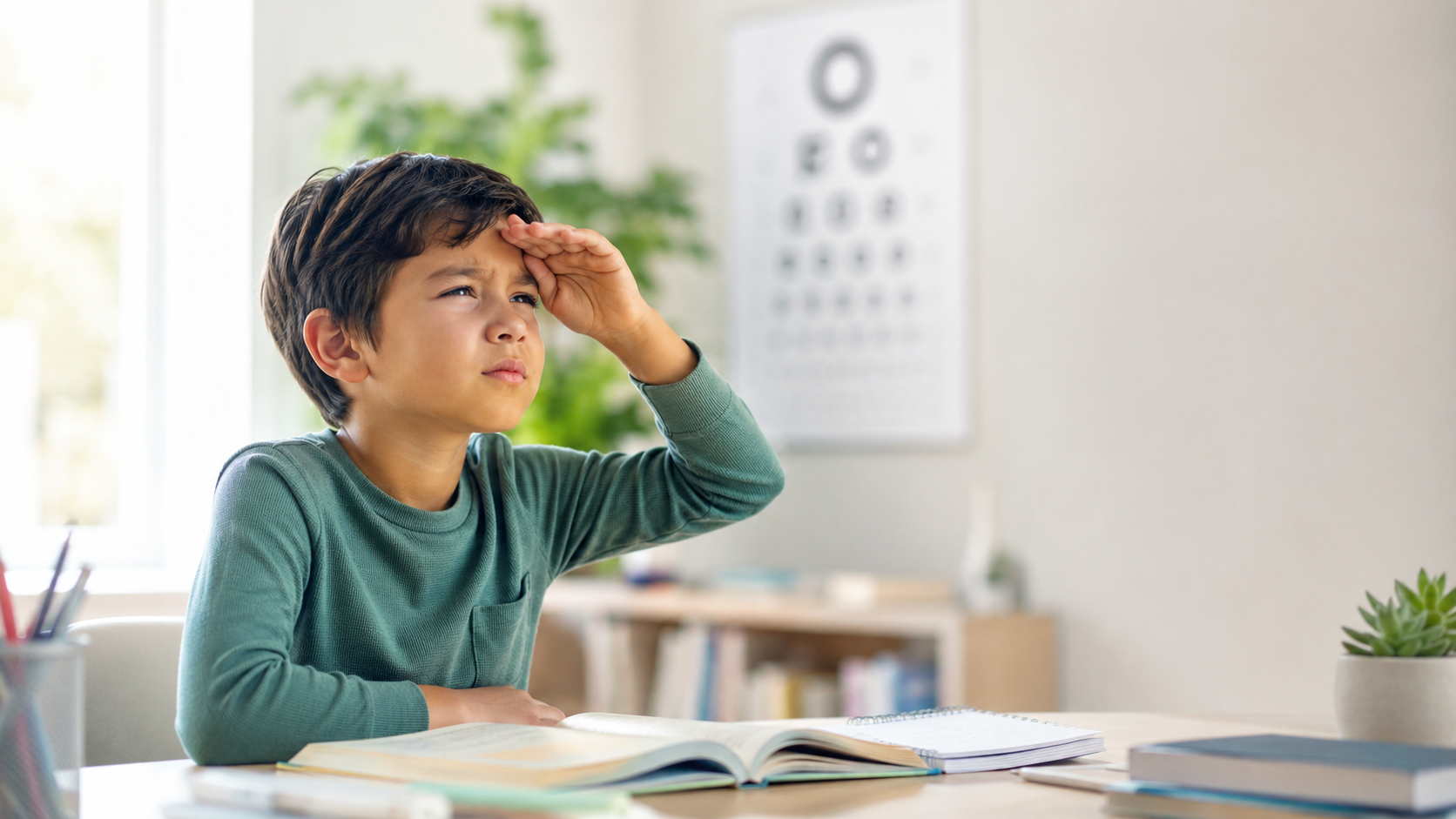
- Frequent squinting
- Closing or covering one eye
- Tilting the head to see
- Poor depth perception
- Difficulty catching a ball or judging distances
- Bumping into objects
- Becoming frustrated with visually demanding activities
- Performing poorly on vision screening
- Discomfort when one eye is covered
Some children have no noticeable signs at all.
Why Children May Not Report Blurry Vision
When one eye sees clearly, the stronger eye may compensate for the weaker one. A child can move around, recognize faces, watch television, and participate in school without realizing there is a difference between the eyes.
Children also lack a basis for comparison. If their vision has always been blurred or unbalanced, they may believe everyone sees the same way.
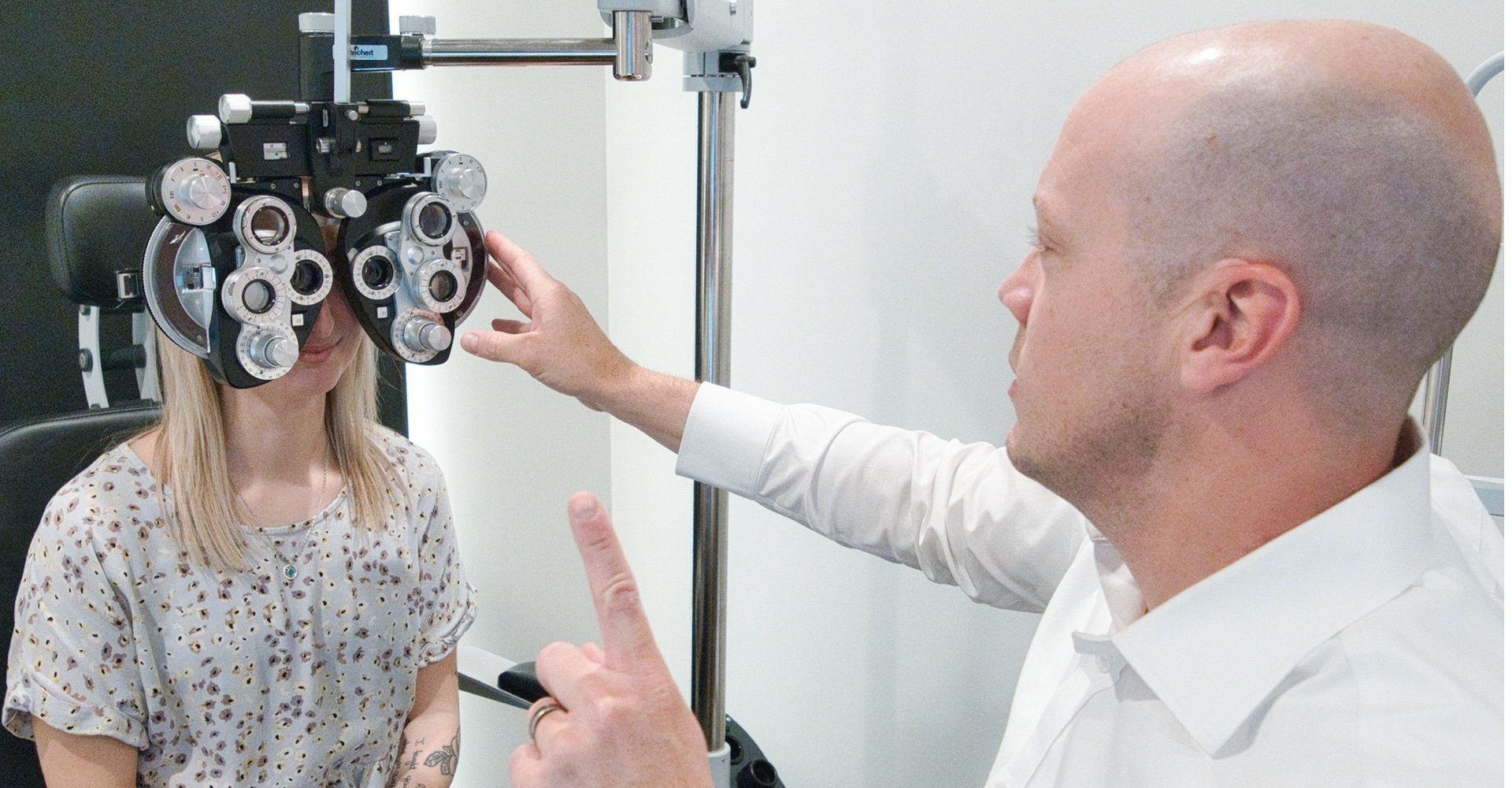
A comprehensive eye examination evaluates each eye separately and assesses more than the child’s ability to read letters on a distance eye chart.
How Is Amblyopia Diagnosed?
An eye doctor can evaluate:
- Visual clarity in each eye
- The child’s eyeglass prescription
- Eye alignment
- Focusing ability
- Eye movement and tracking
- Depth perception
- How well the eyes work together
- The health and development of the eyes
Testing can be adapted for infants, toddlers, and children who do not yet know letters or cannot provide detailed answers.
A vision screening can help identify children who may need additional care, but it does not replace a comprehensive eye examination. Screenings are designed to detect possible concerns and refer children for further evaluation.
How Is Amblyopia Treated?
Treatment depends on what caused the amblyopia and how significantly vision has been affected.
Prescription Glasses
Glasses may be prescribed to correct nearsightedness, farsightedness, astigmatism, or a difference in prescription between the eyes.
For some children, consistently wearing the correct prescription leads to meaningful improvement without additional treatment.
Eye Patching
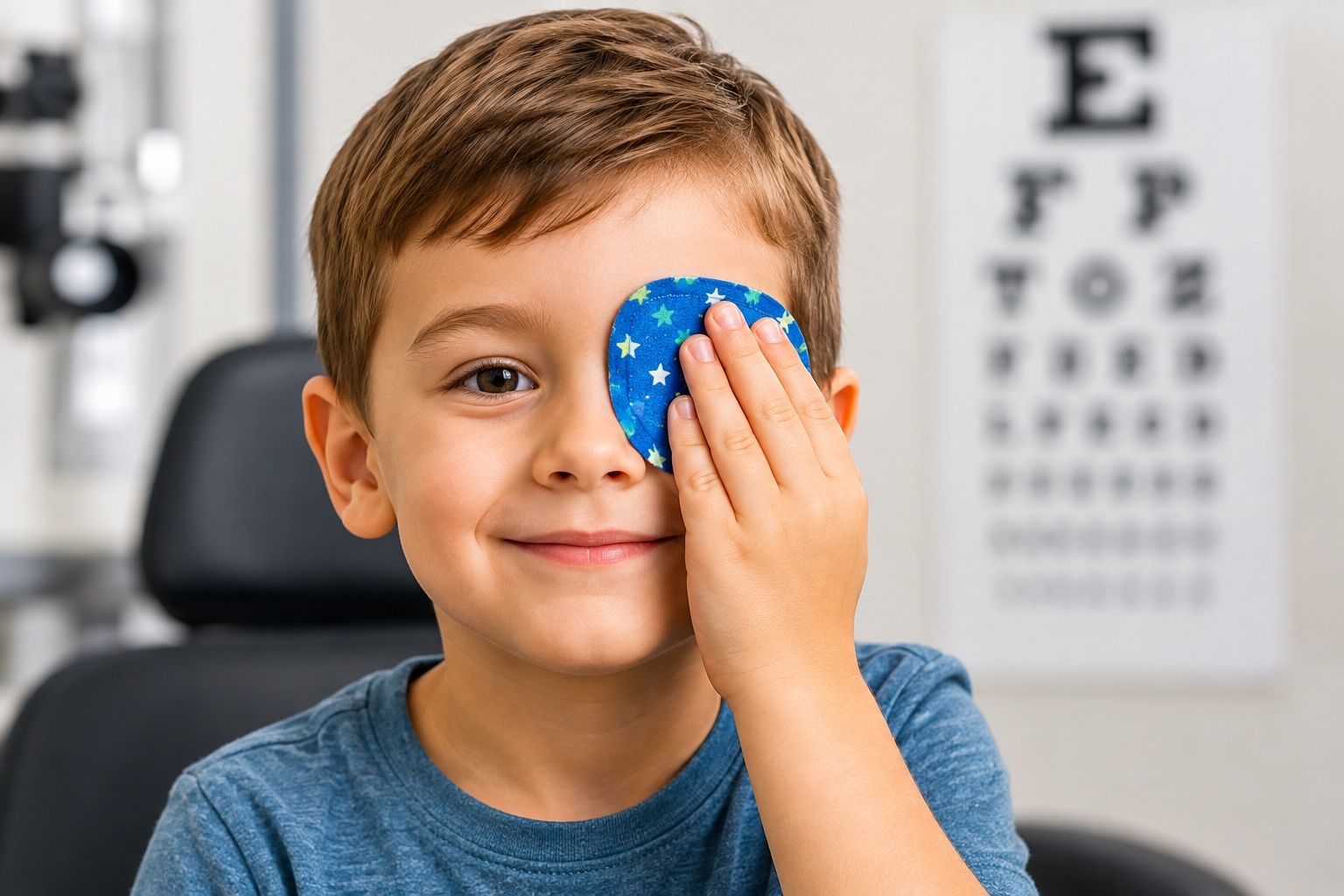
The stronger eye may be covered for a prescribed period each day. This encourages the brain to use and strengthen its connection with the weaker eye.
Parents should follow the doctor’s recommended patching schedule. More patching is not necessarily better, and the appropriate schedule can vary by child.
Atropine Eye Drops
In some cases, prescription eye drops may temporarily blur near vision in the stronger eye. This encourages greater use of the weaker eye.
Treating the Underlying Cause
Strabismus, cataracts, drooping eyelids, and other conditions may require additional treatment. In some cases, surgery may be considered, but further amblyopia treatment may still be needed afterward.
Is It Ever Too Late to Treat Amblyopia?
Amblyopia treatment is generally most effective when the condition is identified during childhood while the visual system is still developing.
However, parents should not assume treatment is pointless simply because a child is older. The American Academy of Ophthalmology recommends offering treatment to children with amblyopia regardless of age, including older children and teenagers—particularly when they have not previously received treatment.
The expected improvement varies according to the child’s age, the cause and severity of amblyopia, and whether the treatment plan is followed consistently.
Why Early Eye Exams Matter
Regular pediatric eye care can identify amblyopia and its risk factors before they begin affecting a child’s daily life.
The CDC notes that the U.S. Preventive Services Task Force recommends at least one vision screening for children between ages three and five to detect amblyopia or its risk factors. Children with symptoms, risk factors, failed screenings, or parental concerns may need evaluation sooner or more frequently.
At Blake Bush Family Eye Care, we use age-appropriate testing and modern diagnostic technology to evaluate children, including young patients who cannot yet read an eye chart.
Schedule a Pediatric Eye Exam in Ardmore
A child does not need to complain about blurry vision to have a meaningful vision problem. When amblyopia is identified and managed early, children have a better opportunity to develop strong vision in both eyes.
Contact Blake Bush Family Eye Care in Ardmore, Oklahoma, to schedule a comprehensive eye examination for your child.
Frequently Asked Questions About Amblyopia
Can amblyopia cause permanent vision loss?
Amblyopia can result in lasting reduced vision when it is not treated. Early detection and appropriate treatment can improve vision and help prevent the condition from becoming more difficult to manage.
Can you tell whether a child has amblyopia by looking at their eyes?
Not always. Some children have a noticeable eye turn, but others have eyes that appear straight and healthy. A comprehensive eye exam is the best way to determine whether each eye is developing normally.
Do glasses correct amblyopia?
Glasses may be an important part of treatment and, in some cases, may produce substantial improvement on their own. Other children may also need patching, prescription drops, or treatment for an underlying eye condition.
How long does amblyopia treatment take?
The timeline varies. It depends on the cause, severity, age of the child, response to treatment, and consistency in following the treatment plan. Progress should be monitored through follow-up appointments.
Can adults have amblyopia?
Yes. Amblyopia begins during childhood, but the reduced vision can persist into adulthood if it was not fully treated. Treatment options and expected outcomes should be discussed with an eye doctor.
Are school vision screenings enough to detect amblyopia?
Screenings are helpful but limited. They may identify children who need further care, but they do not evaluate every aspect of eye health and visual function. A child who passes a screening may still benefit from a comprehensive eye examination.
About the Author
Blake Bush Family Eye Care is a leading provider of optometric services in Ardmore, Oklahoma. Our mission is to help every patient enjoy healthy, clear vision for life through advanced technology, personalized care, and genuine compassion. We provide comprehensive eye exams for all ages — starting at six months — and specialize in dry eye treatment, scleral lens fittings, and ocular disease management.
Serving Ardmore and surrounding communities, we’re committed to early detection, prevention, and customized solutions for every patient’s unique vision needs. Learn more at www.blakebushfamilyeyecare.com