What Can an Eye Exam Reveal About Your Overall Health?
When you think about scheduling an eye exam, you probably think about checking your vision or finding out whether your glasses prescription has changed.
But a comprehensive eye exam can tell your optometrist much more than how clearly you can read an eye chart.
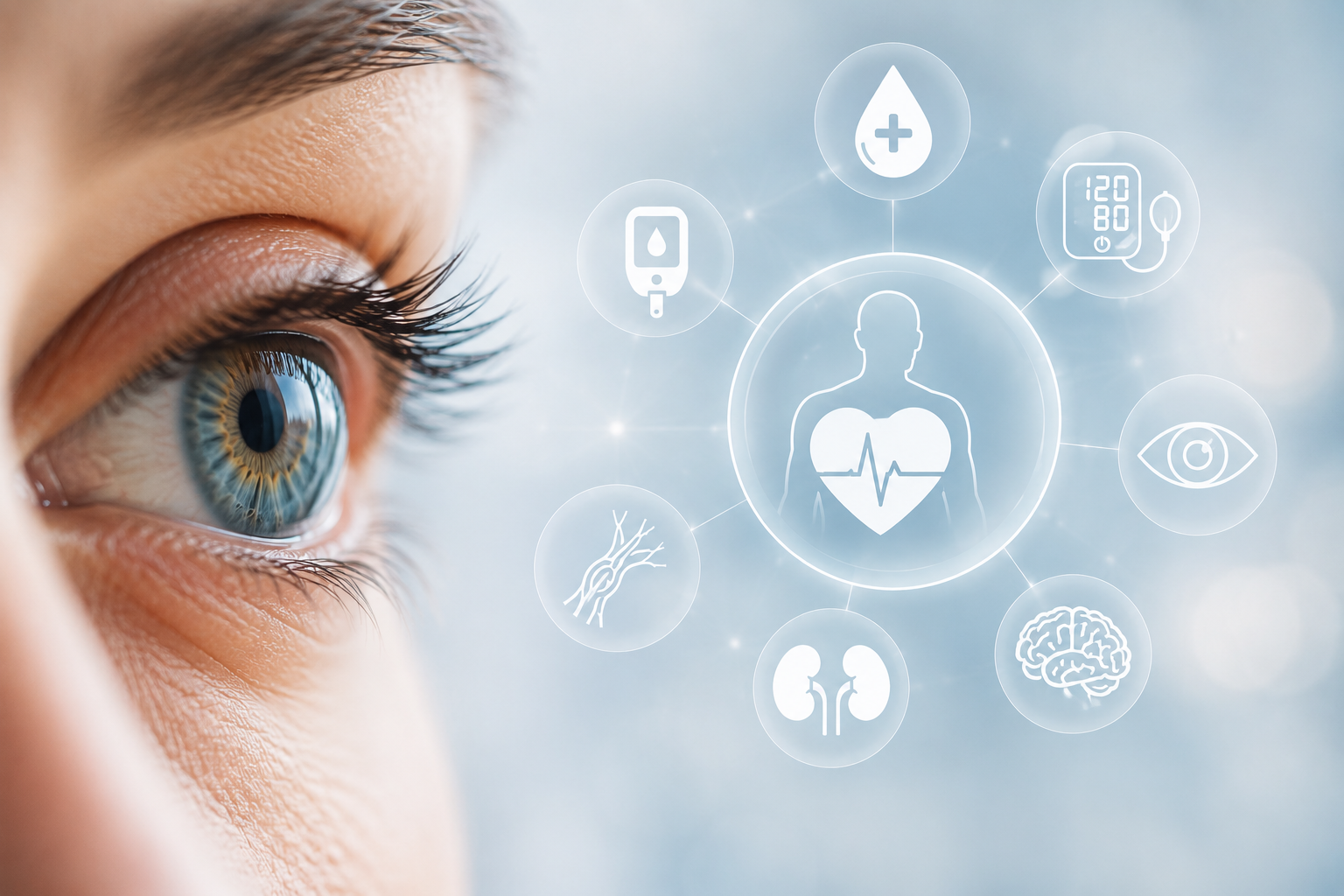
The eyes provide a unique opportunity to observe blood vessels and other structures that can sometimes show signs associated with health conditions elsewhere in the body. That's one reason routine eye care is an important part of caring for your overall health—not just your eyesight.
At Blake Bush Family Eye Care in Ardmore, Oklahoma, we use comprehensive examinations and advanced diagnostic technology to evaluate both your vision and the health of your eyes.
Summary
A comprehensive eye examination does more than determine your eyeglass or contact lens prescription. Changes within the eyes can sometimes provide clues associated with systemic health conditions, including diabetes and high blood pressure.
An eye exam isn't a replacement for your primary medical care, but it can be an important part of your overall preventive health care.
What You'll Learn
In this article, we'll discuss:
- Why an eye exam evaluates more than your vision
- How diabetes can affect the eyes
- What high blood pressure can do to retinal blood vessels
- Why some health problems can affect the eyes before you notice vision changes
- Why routine comprehensive eye examinations are important even when you see clearly
Your Eyes Can Provide a Window Into Your Health
Your eyes contain blood vessels, nerves, and other tissues that your optometrist can examine for signs of disease.
During a comprehensive eye examination, your doctor isn't simply asking, "Can you see 20/20?"
We're also evaluating the health of the structures inside and outside your eyes.
Changes in these structures can sometimes be associated with conditions affecting other parts of the body. When we see something unusual, we may recommend additional testing, closer monitoring, or follow-up with your primary care physician or another healthcare provider.
Diabetes and Your Eyes
Diabetes is one of the best-known examples of a systemic condition that can affect eye health.
Over time, high blood sugar can damage small blood vessels throughout the body, including those in the retina at the back of the eye. This can lead to diabetic retinopathy.
One of the challenges is that early diabetic eye disease may not cause obvious symptoms. A person may feel that their vision is perfectly normal even though changes are occurring inside the eye.
That's why regular eye examinations are especially important for people with diabetes.
High Blood Pressure and Retinal Blood Vessels
High blood pressure can also affect the small blood vessels within the retina.
Your eye doctor may observe changes in these vessels during an examination. Depending on what we see, those findings may lead us to recommend that you follow up with your primary care physician.
An eye examination doesn't replace regular blood-pressure checks or medical care. Instead, it can provide another piece of information about your overall health.
Other Health Conditions Can Affect the Eyes
The connection between your eyes and your overall health extends beyond diabetes and high blood pressure.
Certain autoimmune, inflammatory, neurological, vascular, and other systemic conditions can produce changes involving the eyes.
The specific findings vary considerably from one condition to another. Sometimes patients experience eye symptoms first; in other cases, changes are discovered during an examination before the patient realizes anything is different.
An eye finding alone usually isn't enough to diagnose a systemic disease. Instead, it may provide an important reason to investigate further.
What Does Your Eye Doctor Look for?
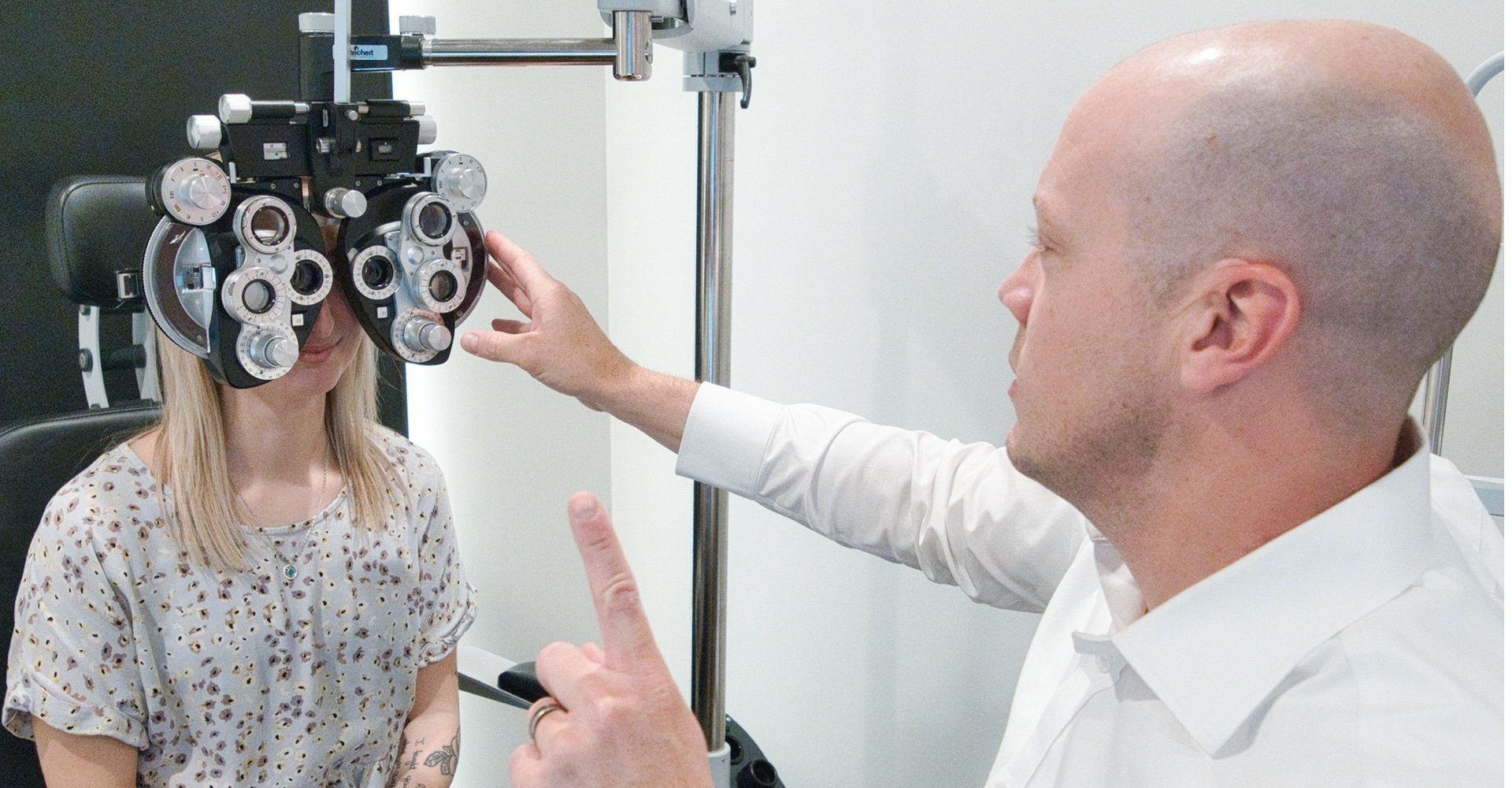
A comprehensive eye examination can include evaluation of your:
- Visual acuity
- Eyeglass or contact lens prescription
- Eye coordination and focusing
- Pupils
- Eye pressure
- Cornea and other structures at the front of the eye
- Retina
- Optic nerve
- Blood vessels within the eye
Your doctor may also recommend additional imaging or diagnostic testing based on your age, health history, family history, symptoms, or findings during the examination.
At Blake Bush Family Eye Care, we use modern diagnostic technology to help identify potential eye-health concerns as early as possible.
"But My Vision Is Fine." Do I Still Need an Eye Exam?
Seeing clearly doesn't necessarily mean your eyes are healthy.
Many eye diseases—and some systemic health conditions that affect the eyes—can develop without immediately causing noticeable changes in vision.
That's an important distinction between a vision screening and a comprehensive eye examination.
Reading the smallest line on an eye chart tells us something important about your vision. It doesn't tell us everything about the health of your eyes.
Eye Care Is Part of Whole-Body Care
Your optometrist isn't a replacement for your primary care physician, and an eye exam isn't designed to diagnose every health condition.
But your eyes are part of your body, and changes in your overall health can sometimes show up there.
Routine comprehensive eye examinations give your doctor an opportunity to look for changes, compare findings over time, and recommend appropriate follow-up when something unusual appears.
At Blake Bush Family Eye Care, our goal is to help patients in Ardmore and surrounding communities protect high-quality vision for a lifetime.
If it's been a while since your last comprehensive eye examination, schedule an appointment with Blake Bush Family Eye Care in Ardmore, Oklahoma.
Frequently Asked Questions
Can an eye exam detect health problems?
An eye examination can sometimes reveal signs associated with health conditions elsewhere in the body. These findings don't necessarily provide a diagnosis, but they may indicate that additional medical evaluation is appropriate.
Can an eye doctor detect diabetes?
Diabetes can cause characteristic changes within the eyes, including diabetic retinopathy. Eye doctors can detect diabetic eye disease, and sometimes eye findings may raise concern about blood-sugar-related problems that warrant medical follow-up.
Can high blood pressure affect your eyes?
Yes. High blood pressure can damage or change blood vessels in the retina. Your optometrist may be able to observe these changes during a comprehensive eye examination.
Can you have an eye problem even if you have 20/20 vision?
Yes. Visual acuity and eye health are not the same thing. Some eye diseases can develop without affecting central vision in their early stages.
Is an eye exam a replacement for an annual physical?
No. Comprehensive eye care complements—not replaces—care from your primary care physician and other healthcare providers.
How often should I have a comprehensive eye exam?
The appropriate schedule depends on factors including your age, eye health, overall health, medications, family history, and risk factors. Your optometrist can recommend an examination schedule appropriate for you.
About the Author
Blake Bush Family Eye Care is a leading provider of optometric services in Ardmore, Oklahoma. Our mission is to help every patient enjoy healthy, clear vision for life through advanced technology, personalized care, and genuine compassion. We provide comprehensive eye exams for all ages — starting at six months — and specialize in dry eye treatment, scleral lens fittings, and ocular disease management.
Serving Ardmore and surrounding communities, we’re committed to early detection, prevention, and customized solutions for every patient’s unique vision needs. Learn more at www.blakebushfamilyeyecare.com.