Myopia in Children: Signs, Progression, and When to Schedule an Eye Exam
Myopia, commonly called nearsightedness, causes distant objects to appear blurry while closer objects may remain clear. It often begins during the school years and can become more pronounced as a child grows.
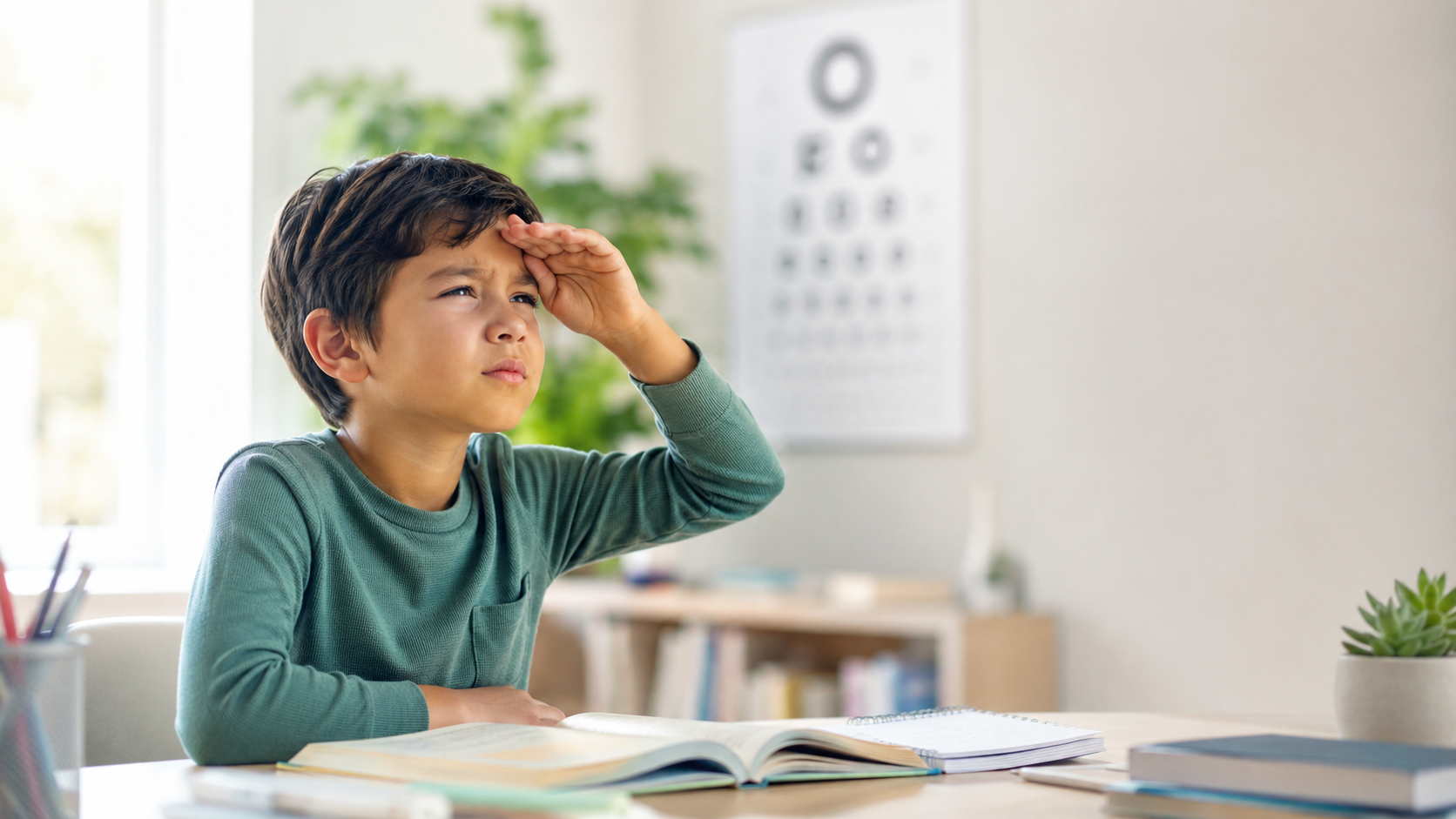
Children may not realize their distance vision has changed. Instead, parents and teachers might notice squinting, sitting close to screens, moving nearer to the classroom board, or struggling to recognize distant objects.
A comprehensive eye examination can identify myopia, determine the prescription needed for clearer vision, and help parents understand whether their child’s eyesight is changing over time.
What You’ll Learn
In this article, you will learn:
- What myopia is and how it affects vision
- Common signs of nearsightedness in children
- Why childhood myopia may worsen over time
- How family history and daily habits may affect risk
- How myopia is diagnosed
- Why regular monitoring matters
What Is Myopia?
Myopia is a refractive condition that makes distant objects appear blurry. A child with myopia might see a book, tablet, or other nearby object clearly but have difficulty seeing the classroom board, television, road signs, or a ball across a field.
In an eye without myopia, incoming light focuses on the retina at the back of the eye. With myopia, light focuses in front of the retina rather than directly on it, causing distant vision to appear blurred.
Myopia often starts between ages 6 and 14 and may continue changing into the early adult years.
What Are the Signs of Myopia in Children?
Children do not always recognize blurry distance vision. If myopia develops gradually, a child may assume everyone sees the same way.
Possible signs include:
- Squinting to see distant objects
- Sitting unusually close to the television
- Moving closer to the classroom board
- Holding screens or other materials close
- Difficulty recognizing people at a distance
- Complaining that the board looks blurry
- Headaches or eye strain
- Frequently rubbing or blinking the eyes
- Losing interest in activities that require clear distance vision
- Difficulty seeing a ball during sports
- A decline in classroom participation or performance
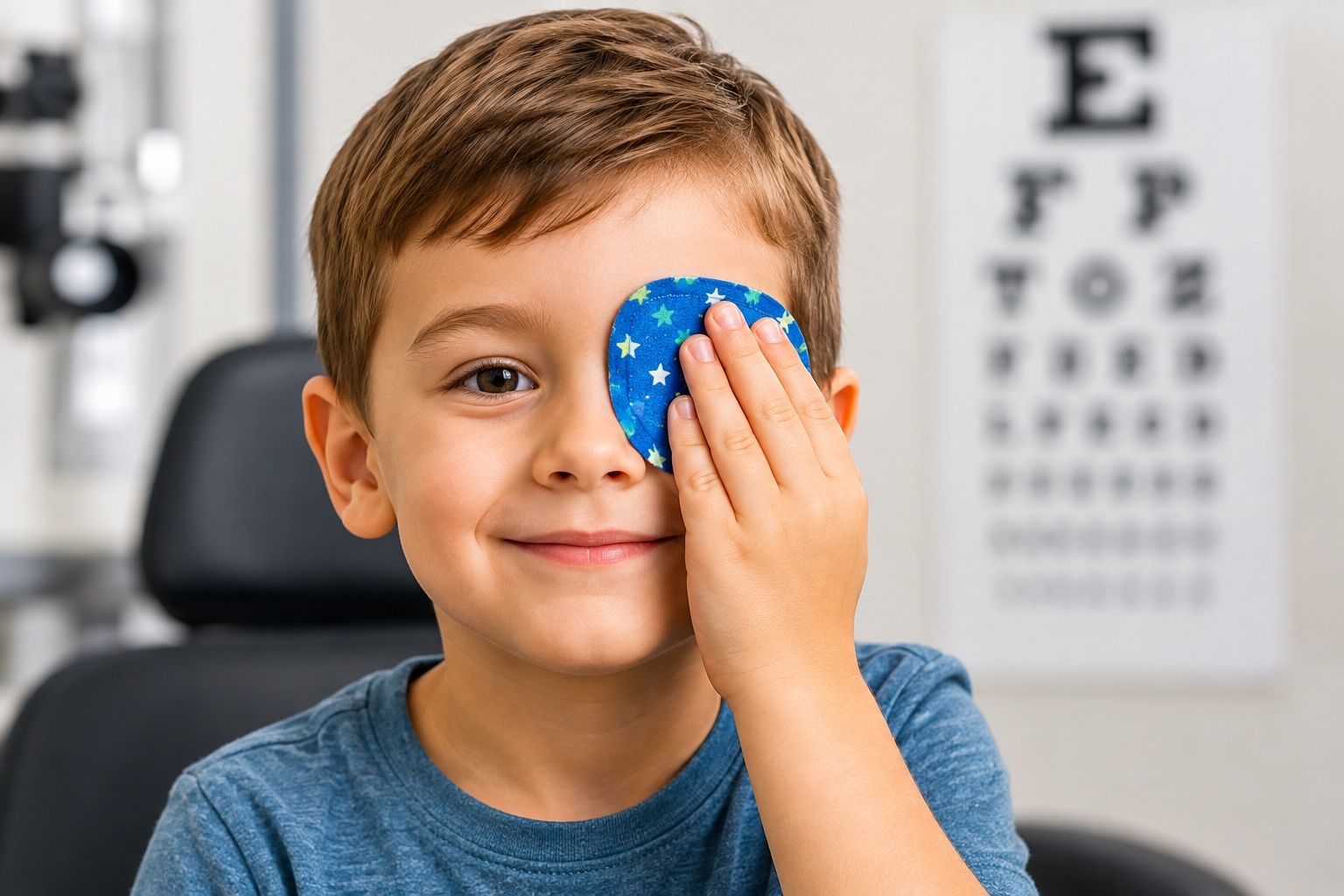
Squinting, holding materials close, covering an eye, and frequent eye rubbing can all indicate that a child should receive a complete vision evaluation.
Why Might a Child Not Mention Blurry Vision?
Children may not have the language or experience to explain that their vision is changing. A young child might say that they cannot see the board, but they may also respond by moving closer, copying another student’s notes, or avoiding tasks that require distance vision.
Some children continue performing well despite blurred vision, particularly when myopia is mild or affects both eyes similarly. Their behavior may be the first indication that something has changed.
Why Does Childhood Myopia Get Worse?
A child’s eyes continue growing and developing. As the eye grows longer from front to back, light may focus farther in front of the retina, increasing the amount of myopia.
Not every child’s prescription changes at the same rate. Some children experience slow changes, while others require updated prescriptions more frequently.
Children who develop myopia at a younger age have more years during which the condition may progress. The National Eye Institute notes that earlier onset gives myopia more opportunity to worsen before the eye finishes developing.
Does Family History Affect Myopia?
Yes. Children have an increased risk of becoming nearsighted when one or both parents have myopia.
Genetics are not the only factor, however. A child without a family history can still develop myopia, and having nearsighted parents does not guarantee that a child will become nearsighted.
Both inherited traits and environmental factors appear to influence myopia development.
Do Screens and Near Work Cause Myopia?
The relationship between near work, screen use, outdoor time, and myopia is complex.
Researchers have found associations between myopia and factors such as extended near work, greater screen exposure, and reduced time outdoors. That does not mean a specific device or activity is the sole cause of a child’s myopia. Genetics, eye growth, daily habits, and other factors may all play a role.
Screens may also cause temporary eye fatigue, dryness, or focusing discomfort even when they are not directly responsible for a child’s prescription.
Parents can encourage balanced visual habits without treating normal reading, homework, or device use as inherently harmful.
Can Spending Time Outdoors Help?
Research indicates that children who spend more time outdoors are less likely to develop myopia, although experts are still studying exactly why outdoor light and visual activity appear to have a protective effect.
Outdoor time does not eliminate genetic risk, reverse existing myopia, or replace professional eye care. It can, however, be a healthy part of a child’s daily routine.
Parents may encourage children to:
- Play outside regularly
- Take breaks from prolonged close work
- Alternate between near and distance activities
- Use screens at a comfortable viewing distance
- Work in a well-lit area
- Avoid holding phones or tablets extremely close
How Is Myopia Diagnosed?
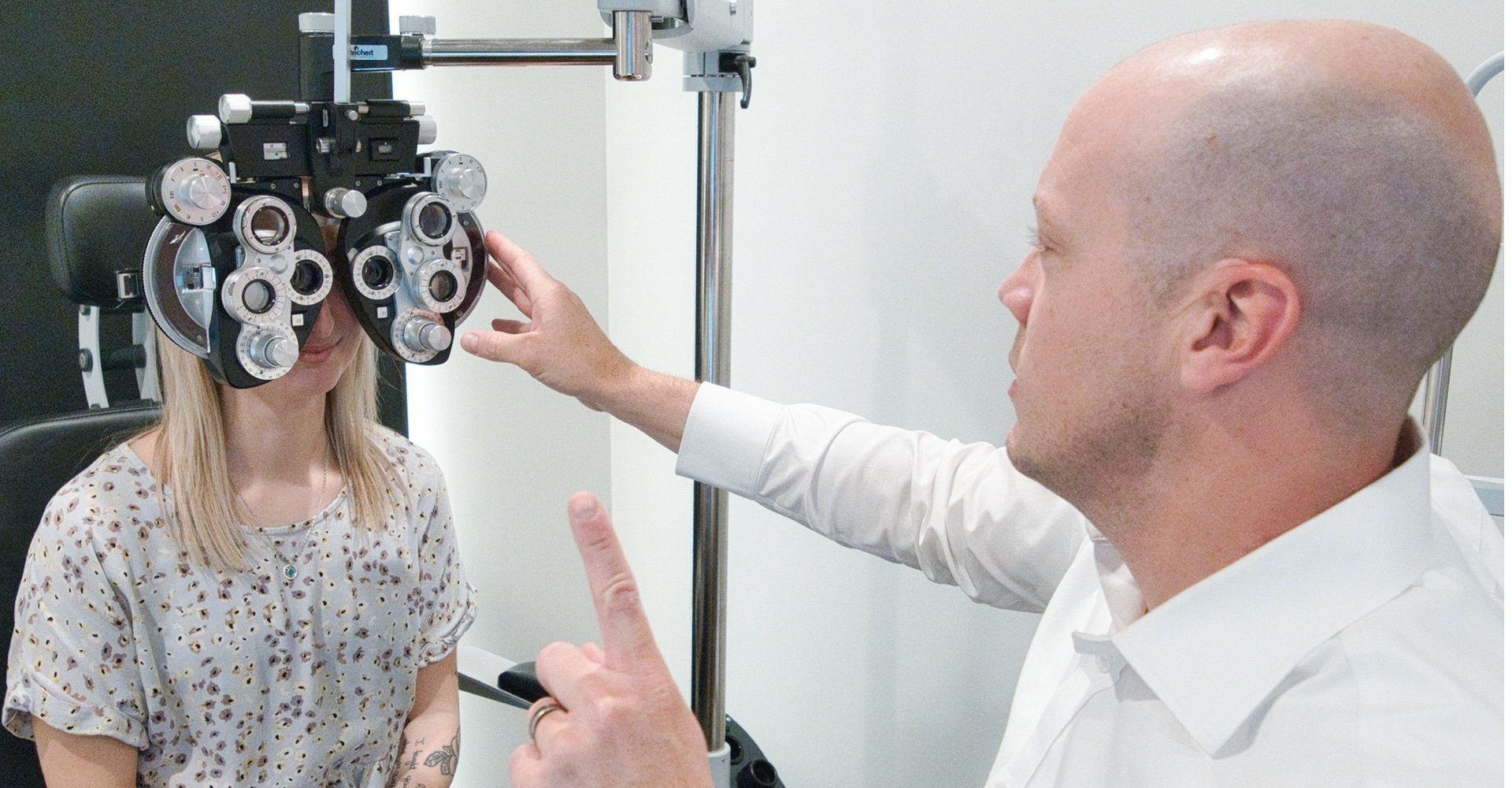
A comprehensive pediatric eye exam can determine whether a child has myopia and measure the prescription needed to improve distance vision.
The exam may evaluate:
- Distance and near visual acuity
- Nearsightedness, farsightedness, and astigmatism
- Prescription differences between the eyes
- Eye alignment and teaming
- Focusing ability
- Eye movements
- Depth perception
- External and internal eye health
The doctor may use dilating or focusing-relaxing eye drops when appropriate. These drops can help obtain an accurate prescription, particularly when a child’s natural focusing ability affects the measurement.
Is a School Vision Screening Enough?
School screenings are useful for identifying children who may need additional care, but they are not the same as comprehensive eye examinations.
A screening may test whether a child can see letters at a distance, but it may not fully assess the prescription, focusing ability, coordination between the eyes, or eye health.
Only an optometrist or ophthalmologist can perform a comprehensive eye and vision examination.
A child who passes a screening may still need an eye exam if parents or teachers notice symptoms.
How Is Childhood Myopia Corrected?
Most children with myopia need prescription lenses to see clearly at a distance.
Depending on the child’s age, prescription, maturity, and visual needs, correction may include:
Eyeglasses
Glasses are a common and effective way to correct childhood myopia. They may be worn throughout the day or according to the doctor’s instructions.
Contact Lenses
Some children and teenagers may be candidates for contact lenses. Readiness depends on responsibility, hygiene, lifestyle, prescription, eye health, and the family’s ability to supervise lens care.
Contact lenses require proper cleaning, replacement, and follow-up care to reduce the risk of eye infections and other complications.
Can Myopia Progression Be Slowed?
Certain treatments are designed not only to correct blurry vision but also to reduce the rate at which myopia progresses.
Depending on the child and the services available, these approaches may include specially designed contact lenses, orthokeratology lenses worn overnight, or prescription eye drops. Research supported by the National Eye Institute has shown that certain multifocal contact lenses can slow myopia progression in children.
These treatments are not appropriate for every patient, and results vary. They require a detailed evaluation, careful monitoring, and discussion of potential benefits, limitations, costs, and responsibilities.
Parents concerned about rapid prescription changes should speak with their child’s eye doctor about whether additional evaluation or a myopia-management referral is appropriate.
Why Does Monitoring Myopia Matter?
An updated prescription helps children function comfortably at school, during sports, and in everyday activities. Regular examinations also allow the doctor to track how quickly the prescription is changing and evaluate the overall health of the eyes.
Higher amounts of myopia are associated with increased risks of certain eye diseases later in life, including retinal detachment and glaucoma. Slowing progression during childhood may potentially reduce some of these long-term risks.
This does not mean that every nearsighted child will develop an eye disease. It does mean that ongoing eye care is important, particularly when the prescription changes quickly or becomes relatively strong.
When Should Parents Schedule an Eye Exam?
Schedule a comprehensive eye exam when:
- Your child reports blurry distance vision
- Your child squints frequently
- A teacher notices difficulty seeing the board
- Your child sits unusually close to screens
- School or sports performance changes
- Your child fails a vision screening
- Glasses no longer seem effective
- The prescription has changed quickly
- One or both parents have significant myopia
- Your child has not had a recent comprehensive examination
Sudden vision loss, flashes of light, a sudden increase in floaters, significant eye pain, or an eye injury should be evaluated promptly.
Pediatric Eye Exams in Ardmore, Oklahoma
Children depend on clear vision in the classroom, on the playground, during sports, and throughout everyday life. Because children do not always report blurry vision, regular comprehensive eye examinations can identify myopia before it begins interfering with their activities.
At Blake Bush Family Eye Care, we use age-appropriate testing and modern diagnostic technology to evaluate children’s eyesight and eye health.
Contact our Ardmore office to schedule a comprehensive eye examination for your child.
Frequently Asked Questions About Childhood Myopia
Is myopia the same as nearsightedness?
Yes. Myopia is the medical term for nearsightedness. It usually means nearby objects appear clearer than distant ones.
Can myopia go away as a child grows?
Myopia does not usually disappear on its own. A child’s prescription may stabilize as growth slows, but glasses or contact lenses may still be needed for clear distance vision.
Can myopia go away as a child grows?
Myopia does not usually disappear on its own. A child’s prescription may stabilize as growth slows, but glasses or contact lenses may still be needed for clear distance vision.
Will wearing glasses make my child’s eyes weaker?
No. Properly prescribed glasses provide the correction needed to focus clearly. They do not make the eyes dependent on glasses or cause myopia to worsen.
How often should a child with myopia have an eye exam?
The appropriate schedule depends on the child’s age, prescription, symptoms, treatment, and rate of progression. Children with changing prescriptions may need to be examined more frequently than children with stable vision.
Can too much screen time cause myopia?
Screen use alone is not considered the sole cause of myopia. Research suggests that extended near work, less time outdoors, genetics, and other factors may contribute to its development or progression.
Can outdoor time reverse myopia?
No. Outdoor activity does not reverse an existing prescription. Research suggests that it may help reduce the likelihood of developing myopia and may support healthy visual development.
Can children wear contact lenses for myopia?
Many children and teenagers can wear contact lenses safely when they are mature enough to follow proper hygiene and care instructions. An eye doctor can determine whether a child is a good candidate.
About the Author
Blake Bush Family Eye Care is a leading provider of optometric services in Ardmore, Oklahoma. Our mission is to help every patient enjoy healthy, clear vision for life through advanced technology, personalized care, and genuine compassion. We provide comprehensive eye exams for all ages — starting at six months — and specialize in dry eye treatment, scleral lens fittings, and ocular disease management.
Serving Ardmore and surrounding communities, we’re committed to early detection, prevention, and customized solutions for every patient’s unique vision needs. Learn more at www.blakebushfamilyeyecare.com.