Can You Sleep in Contact Lenses? Risks Every Wearer Should Know
Summary
Falling asleep in contact lenses may seem harmless, especially after a long day or while traveling, but it can significantly increase your risk of serious eye complications. Whether you wear daily, monthly, or extended-wear lenses, understanding the risks of overnight contact lens wear is essential for protecting your vision and long-term eye health.
What You’ll Learn
- Why sleeping in contact lenses increases infection risk
- Common complications linked to overnight lens wear
- Warning signs you should never ignore
- Safer contact lens habits
- When to schedule a contact lens exam
Is It Safe to Sleep in Contact Lenses?
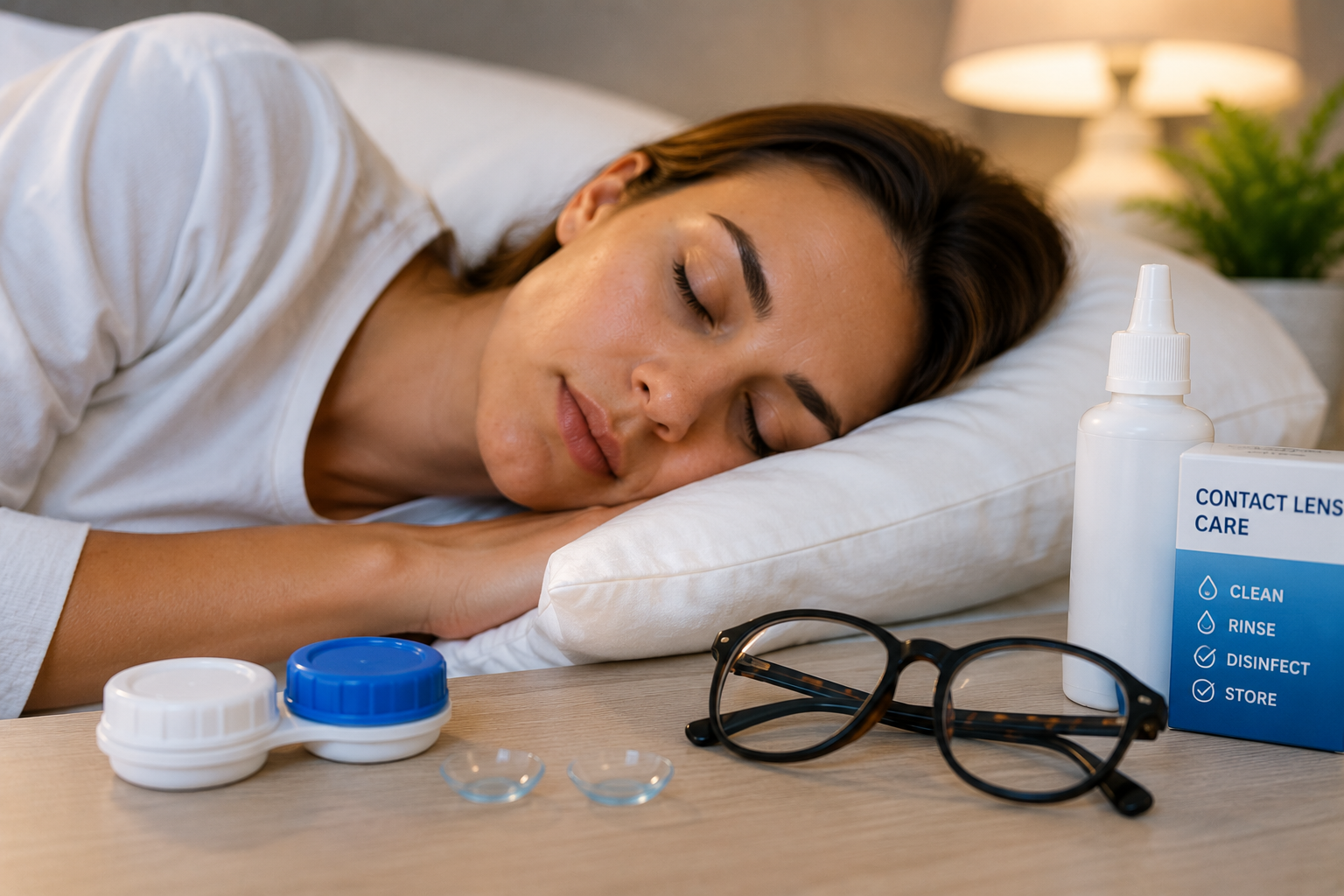
In most cases, sleeping in contact lenses is not recommended unless specifically approved by your eye doctor.
When your eyes are closed during sleep, less oxygen reaches the cornea. Contact lenses can further reduce oxygen flow, creating an environment where bacteria and inflammation are more likely to develop.
Even occasional overnight wear can increase your risk of eye infections and complications.
Risks of Sleeping in Contact Lenses
Eye Infections
Sleeping in contacts increases the likelihood of bacterial infections, including serious corneal infections that may threaten vision if left untreated.
Corneal Inflammation
Reduced oxygen can cause swelling and irritation of the cornea, leading to redness, pain, and blurry vision.
Dry Eye Symptoms
Overnight lens wear may worsen dryness and discomfort, especially during summer travel or in air-conditioned environments.
Corneal Ulcers
In severe cases, untreated infections can lead to corneal ulcers and permanent vision damage.
Warning Signs You Should Never Ignore
Remove your contact lenses immediately and contact your eye doctor if you experience:
- Eye pain
- Redness
- Light sensitivity
- Blurry vision
- Excessive tearing
- Discharge from the eye
Prompt treatment is important to help prevent more serious complications.
Safer Contact Lens Habits
Remove Lenses Before Sleeping
Even short naps in contact lenses can increase irritation and dryness.
Follow Replacement Schedules
Using lenses longer than recommended increases buildup and contamination risk.
Keep Lenses and Cases Clean
Always use and replace lens cases regularly.
Never Use Water on Contact Lenses
Tap water can introduce harmful microorganisms to your lenses and eyes.
Schedule Regular Contact Lens Exams
Routine evaluations help ensure your prescription, lens fit, and eye health remain optimal.
Are Extended-Wear Contacts Safer?
Some contact lenses are FDA-approved for overnight wear, but that does not mean they are risk-free. Sleeping in any contact lens still increases the chance of complications compared to removing them nightly.
Your eye doctor can determine whether extended-wear lenses are appropriate for your eyes and lifestyle.
FAQs
What happens if I accidentally fall asleep in my contacts once?
One time may not cause permanent damage, but it can still increase irritation and infection risk. Remove the lenses carefully and monitor for symptoms.
Can sleeping in contacts cause blindness?
Severe infections are rare, but untreated corneal infections can potentially lead to permanent vision loss.
Are daily disposable lenses safer?
Daily disposable lenses can reduce some risks associated with buildup and contamination, but they should still be removed before sleep unless specifically approved otherwise.
Why do my contacts feel dry after sleeping in them?
Reduced oxygen and tear circulation overnight can cause lenses to dry out and irritate the eye surface
How often should contact lens wearers have an eye exam?
Annual contact lens exams are recommended to monitor eye health and ensure proper lens fit and prescription accuracy
About the Author
Blake Bush Family Eye Care is a leading provider of optometric services in Ardmore, Oklahoma. Our mission is to help every patient enjoy healthy, clear vision for life through advanced technology, personalized care, and genuine compassion. We provide comprehensive eye exams for all ages — starting at six months — and specialize in dry eye treatment, scleral lens fittings, and ocular disease management.
Serving Ardmore and surrounding communities, we’re committed to early detection, prevention, and customized solutions for every patient’s unique vision needs. Learn more at www.blakebushfamilyeyecare.com.